
Iran’s Shadow Networks – An assassination-plot conviction, new terrorism charges and renewed FBI notices reveal a serious security challenge. The evidence also shows why confirmed operations must be separated from alarming but unverified reports.
HLS.Today | November 18, 2026
An overseas handler does not necessarily need to send an entire team into the United States to threaten American lives. A willing intermediary, a criminal contact and an offer of money can become the starting point of an operation.
Recent Justice Department and FBI announcements bring that danger into focus. They describe Iranian-directed assassination efforts and alleged networks reaching across national borders to target public officials, Jewish communities and American military interests.
The public record establishes a serious homeland-security concern. It also documents successful intervention: investigators disrupted plots, prosecutors secured a conviction, and authorities continue pursuing suspected organizers.
But amid growing attention to Iran, another distinction matters. Evidence of an assassination conspiracy does not automatically confirm rumors of a radiological attack, explain an industrial emergency or establish that unrelated incidents belong to one coordinated campaign.
For readers following HLS.Today’s coverage of U.S.–Iran tensions and security around the Strait of Hormuz, these cases show another dimension of the confrontation: threats that can develop through personal contacts and intermediaries far from the battlefield.
A prison sentence provides the clearest recent evidence. On November 17, the Justice Department announced that Asif Merchant had been sentenced to 330 months in prison—27½ years—following his conviction for terrorism transcending national boundaries and murder for hire.
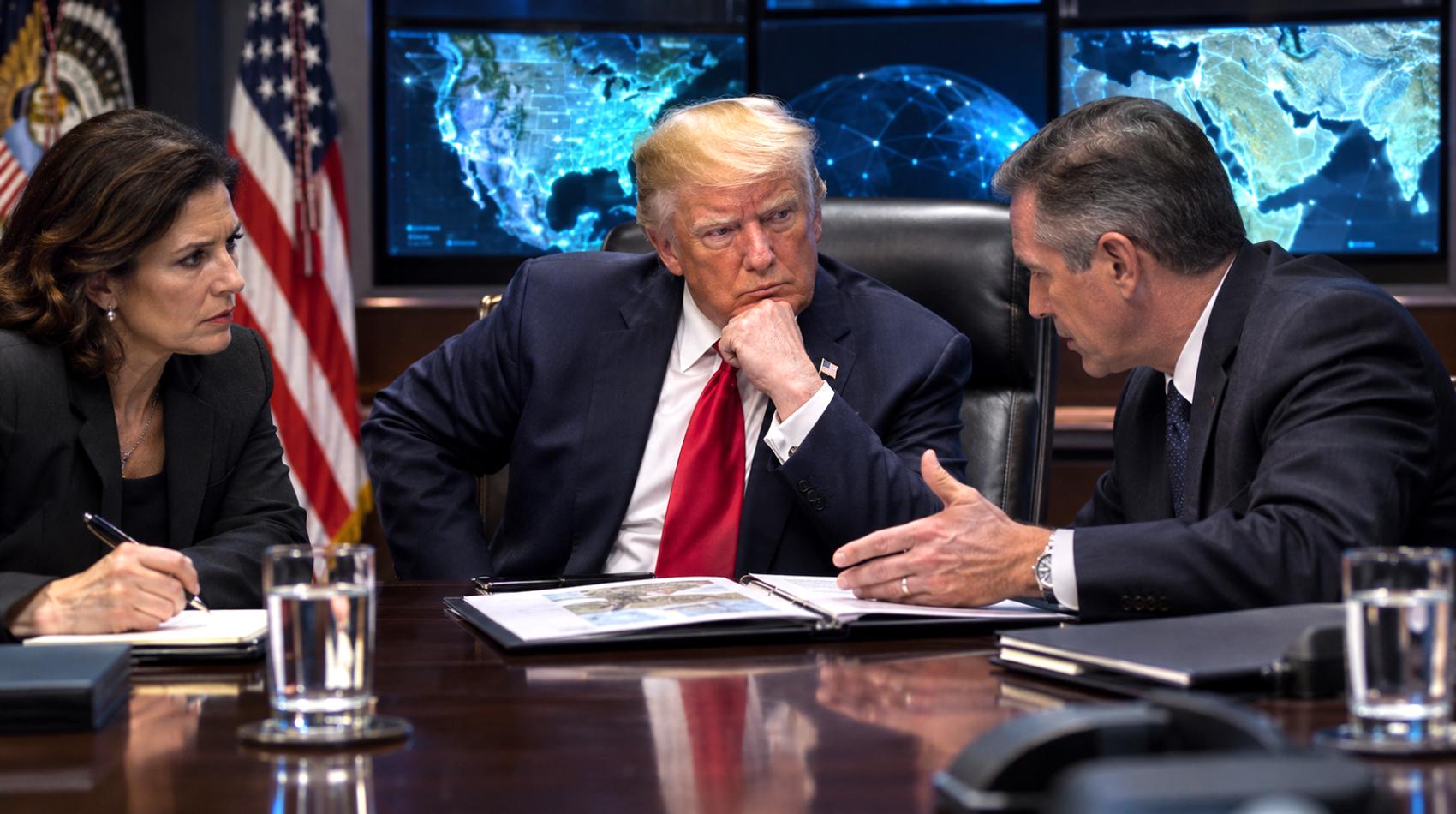
DOJ describes Merchant as a trained operative of Iran’s Islamic Revolutionary Guard Corps, or IRGC. According to the department, he traveled to the United States to arrange political assassinations and believed Donald Trump would be the ultimate target.
The operation broke down when an acquaintance reported Merchant to the FBI. The purported hitmen he subsequently approached were undercover agents.
The department’s account describes overseas direction combined with an attempt to recruit criminal assistance inside America. It also illustrates the importance of someone recognizing a dangerous approach and reporting it.
Attorney General Todd Blanche stated:
“The Department of Justice will not tolerate foreign terrorist plots against our leaders”
This case has moved beyond suspicion: a jury convicted Merchant, and a federal judge imposed sentence. United States Department of Justice
A separate indictment describes a wider alleged network. On November 10, DOJ announced terrorism-related charges against three alleged Iranian-backed operatives: Mohammad Baqer Saad Dawood al-Saadi, Mohsen Mohajeri and Mohammad Ali al-Hassani.
Prosecutors allege activity supporting the IRGC and Kata’ib Hizballah, the Iraqi militia. Both are U.S.-designated foreign terrorist organizations.
The allegations cover nearly 20 attacks and attempted attacks across Europe and the United States, including an attempted New York synagogue bombing and a September 2026 plot against RAF Fairford in Britain, where American personnel and aircraft were stationed.
According to DOJ, organizers used overseas contacts, criminal associates and intermediaries. The department also alleges that coded communications continued through third parties after one defendant entered U.S. custody.
These are serious accusations, but they remain allegations to be tested in court. The geographic scope also matters: the announcement does not describe nearly 20 attacks inside the United States. United States Department of Justice
Together, the cases illustrate why the phrase “local agents” needs careful explanation. A person assisting a foreign operation could be an intelligence operative, an intermediary or a criminal recruited for payment. Those roles differ in training, motivation and knowledge of the ultimate sponsor.
The practical question is whether investigators can establish direction, financing, communication or other evidence connecting an individual to an operation. Nationality, religion or political opinion alone cannot establish that connection.
The FBI is also renewing attention to an older alleged plot. In a November 10 announcement, the bureau added alleged IRGC member Shahram Poursafi to its Most Wanted Terrorists list and released information about three associates.
The underlying allegations concern efforts between October 2021 and April 2022 to arrange the murders of former U.S. officials. The FBI says Poursafi sought to pay people in the United States $300,000 in connection with the murder scheme.
The bureau identifies IRGC-Qods Force Unit 840 as responsible for developing lethal plotting operations. It also highlights a State Department reward of up to $20 million for information leading to Poursafi’s arrest and conviction.
The new publicity is an enforcement development concerning an older alleged operation. It should not be mistaken for an announcement that investigators discovered an entirely new plot this month. FBI
The newest radiological and chemical-attack reports require a different evidentiary label. Recent news coverage has described intelligence suggesting that Iran considered potential attacks in Washington involving radiological or chemical weapons.
Those accounts rely on unnamed officials. They are not equivalent to a public government announcement that a weapon has been deployed or an attack is imminent.
According to UPI’s November 17 reporting, President Trump said the matter was being examined seriously. DHS Secretary Markwayne Mullin characterized the planning as aspirational, while the White House said there were no credible threats to the homeland at that time. www.upi.com
That public response should be read alongside the reports, rather than omitted from them. Officials can investigate a potential adversary’s intentions without confirming that the adversary possesses an operational capability ready for use.
The sources reviewed for this article do not publicly establish that an Iranian radiological weapon, chemical weapon or operational attack team has been positioned in Washington. Intelligence reporting may evolve, but that missing confirmation cannot be supplied by speculation.
Nor should every domestic emergency be attributed to Iran. The November 13 incident at the BioUrja facility in Peoria, Illinois, offers a timely example.
In its November 17 announcement, DOJ reported charges against Andrew M. Kozak of Chillicothe, Illinois, involving threatening communications. Prosecutors allege that he emailed a threat stating that explosive devices had been placed at the plant.
The announcement does not attribute the incident to Iran, the IRGC or an Iranian proxy. It describes a pending criminal case, and the defendant is presumed innocent unless proven guilty. Its appearance in the same news cycle as Iranian threat reporting does not establish a connection. www.justice.gov
The same attention to evidence applies across counterterrorism coverage. HLS.Today’s examination of terrorism cases and Afghan removals similarly distinguishes individual criminal findings from broader claims about an entire population.
For homeland-security agencies, the documented cases point toward a demanding investigative task: identifying who directs an operation, who recruits participants and who supplies the resources. For the public, they show the value of reporting concrete threats rather than circulating unverified explanations.
The November announcements provide evidence of both danger and disruption. Iranian-directed plotting has produced a conviction; additional alleged networks face prosecution; wanted suspects remain under pursuit. The next development that changes the picture should come with evidence—a court filing, an attributed government assessment or a documented investigative finding.