

DHS FY2026: A Stronger Border Takes Shape
Lower apprehensions, sustained enforcement and investment in border infrastructure mark a positive milestone for the Trump administration—and an opportunity to strengthen long-term security.
The United States has reached a significant border-enforcement milestone. In its October 16 announcement, the Department of Homeland Security reported sharply lower apprehensions and nationwide encounters in preliminary Fiscal Year 2026 data.
For President Donald Trump and Homeland Security Secretary Markwayne Mullin, the results provide a positive measure of progress. For homeland security professionals, they raise an equally important question: how can reduced pressure translate into lasting operational improvements?
The Figures Behind the Milestone
FY2026 covers October 1, 2025, through September 30, 2026. DHS reports:
- 98,708 southwest border apprehensions, approximately 95% below the more than 1.8 million annual level it cites for the Biden administration.
- 379,243 nationwide CBP encounters, described by DHS as the lowest annual total in the agency’s history.
- Zero Border Patrol releases during the fiscal year, with September completing 17 consecutive months.
The 95% comparison is against the earlier administration’s annual level, not a year-on-year comparison with FY2025. The figures remain preliminary.
Understanding What the Numbers Measure
These categories answer different questions. Southwest apprehensions concern Border Patrol enforcement between ports of entry. Nationwide encounters cover a broader set of CBP enforcement activity, including at official entry points.
They should not be presented as interchangeable totals or as a complete count of undetected crossings. Similarly, a Border Patrol release figure does not establish what happened in every other agency’s custody or immigration proceeding.
Readers looking for historical context can revisit HLS.Today’s 2022 report on CBP migrant encounters, which explains the distinction between Border Patrol and Office of Field Operations statistics. That archived article includes year-to-date figures and should not be treated as a finalized FY2022 comparison.
Clear definitions make the current results more useful to readers and decision-makers.
A Trend Visible From the Start of the Fiscal Year
The year-end announcement follows earlier official reporting of reduced activity.
The House Homeland Security Committee’s October FY2026 border brief recorded 7,989 southwest Border Patrol apprehensions in October 2025, compared with 56,515 in October 2024—an 86% decrease.
It also reported 30,573 nationwide encounters for that opening month, versus 142,742 a year earlier.
These figures show that the fiscal year began at a substantially lower level. The committee brief provides useful chronological context, although its CBP-derived figures are not an independent audit of the latest annual announcement.
Connecting Policy With Operational Priorities
President Trump’s January 20, 2025 executive order, “Securing Our Borders,” established a clear set of priorities: physical barriers supported by personnel and technology, stronger detention and removal efforts within legal authority, cooperation with state and local agencies, and international coordination.
It also directed attention to investigations and prosecutions involving human smuggling and trafficking.
The constructive feature of this approach is its recognition that border security involves several connected capabilities. Personnel need infrastructure, detection systems and workable procedures; physical barriers need monitoring and an effective response.
The order documents policy direction. It does not, by itself, prove that every measure was fully implemented or quantify each measure’s contribution to the decline. The annual results are nevertheless consistent with the administration’s stated objective of reducing unlawful entry.
Technology and Infrastructure Must Work Together
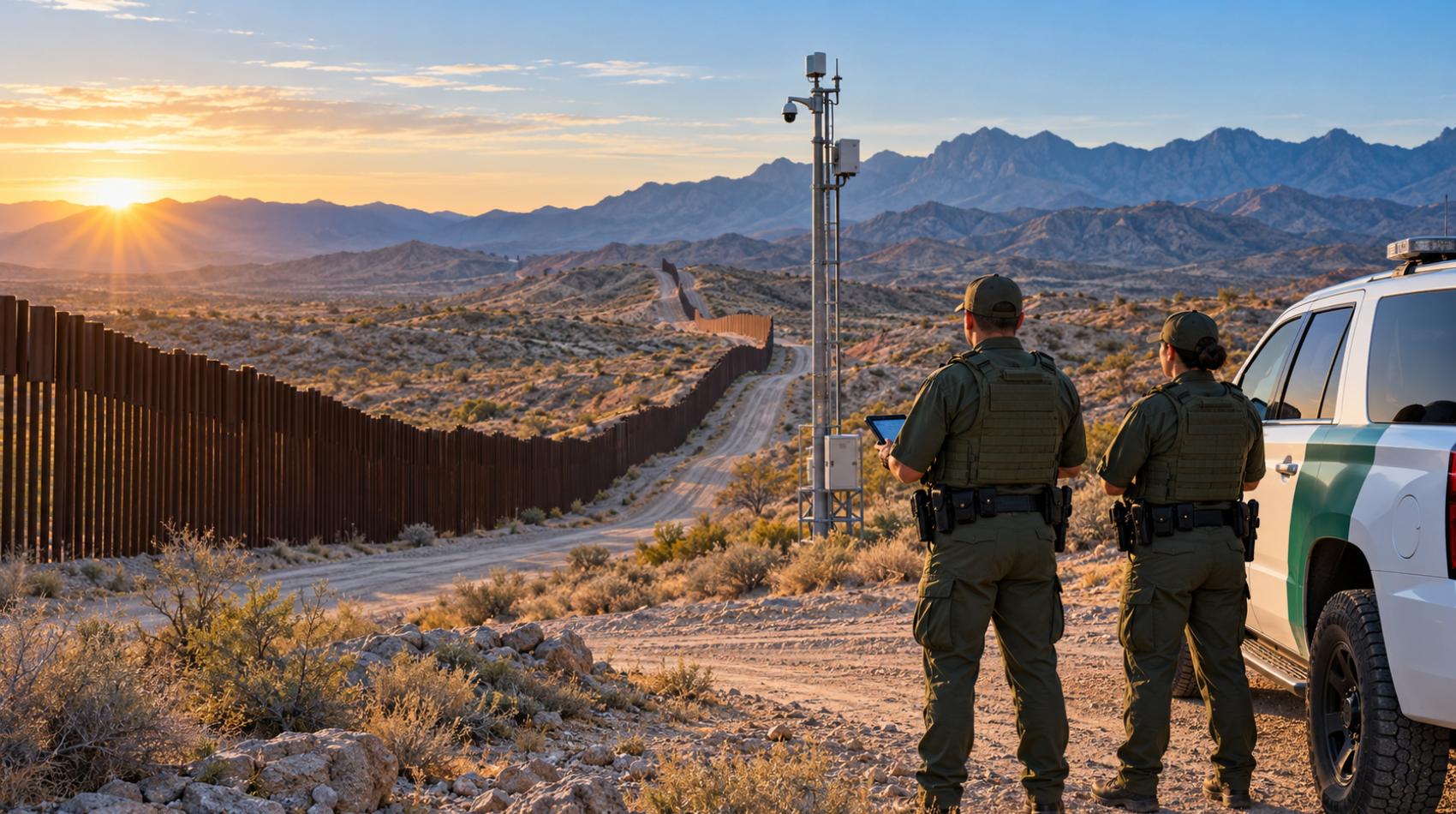
CBP’s Smart Wall overview and frequently asked questions describe investment in infrastructure, technology and enforcement personnel. The agency identifies primary and secondary walls and waterborne barriers among the projects supported by its contracts.
For an operational audience, the significance lies in how those components work together. A barrier can influence movement; detection can alert personnel; trained teams must assess the situation and respond. The practical value depends on coverage, reliability, maintenance and deployment.
This is an important distinction for procurement teams: completed construction, awarded contracts and demonstrated operational performance are different measures of progress.
HLS.Today’s Border Security section follows the broader mix of enforcement, infrastructure and technology shaping this mission.
Lower Pressure Creates an Opportunity
From an operational perspective, fewer apprehensions can offer agencies more flexibility in how they deploy staff and equipment. Potential benefits include more time for patrols, intelligence work, training and coordination.
These are opportunities, not outcomes established by the annual totals alone. Demonstrating them requires evidence about staffing, response times and mission performance.
Border security also continues at official ports. HLS.Today’s report on narcotics intercepted in commercial shipments at Otay Mesa illustrates why cargo inspection remains essential even when migration figures fall.
CBP’s travel guidance likewise describes a parallel responsibility: screening arrivals while facilitating legitimate travel. Effective border management must protect both security and lawful movement.
Turning a Milestone Into Durable Progress
The administration has a positive result to report in the enforcement measures released by DHS. The next test is sustaining that progress while maintaining effective screening, humane treatment, lawful procedures and readiness for changing threats.
For readers following HLS.Today’s Homeland Security coverage, the larger lesson is practical: a quieter border creates room to strengthen the system. Making that advantage durable will depend on frontline capability, reliable infrastructure and transparent reporting.
Official Sources
- DHS — FY2026 border announcement, October 16, 2026.
- CBP — corresponding FY2026 announcement. This is the same agency announcement, not separate corroborating research.
- House Homeland Security Committee — October FY2026 Border Brief.
- White House — Securing Our Borders, January 20, 2025.
- CBP — Smart Wall Frequently Asked Questions.
- CBP — Travel.